


Local transportation
Typical profile: The coil is transported from the mill to a service center or warehouse, or directly to a customer in proximity to the production site. The time in transit is limited, often one single mode of transport (usually truck transport) is used, and the ambient temperature and humidity will stay roughly the same.
Packaging objectives
-
- Provide basic moisture protection (protects from light rain during outdoors loading/unloading).
-
- Protect the coil from corrosion if the weather conditions are unpredictable, or in case storage times become longer than planned. This is especially important in consignment stock.
-
- Protect against mechanical damage to the coil surface or coil edges during handling.
Recommended minimum packaging
-
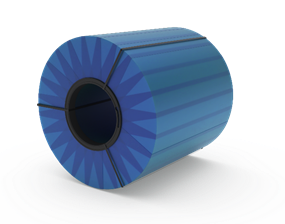
- Stretchfilm wrapping (reinforced if needed), possibly with VCI (depending on product to be packed)
-
- Inner edge protection (in the eye) + plastic strapping
Why it works
Stretchfilm protects the coil from corrosion and acts as basic weather protection during loading operations outdoors. The wrapping should be tight and through the eye for minimal air inclusion to avoid corrosion. Stretchfilm with VCI is a great insurance against corrosion.
To remain effective over time the wrap needs to stay intact and without rips or holes during both transit and storage.
The inner edge protection serves three purposes:
- It protects coil edges from damage from lifting devices, such as forklifts, coil rams, crane hooks, chains or slings.
- It also protects the stretchfilm from ripping at the edges when the coil is lifted. This type of damage may otherwise occur even with padded lifting devices.
- It ensures that the straps that secure the coil during transport do not chafe against the sharp coil edges and rip apart.
The edge protection can be secured with steel or plastic straps.
Long distance transportation
Typical profile: Transportation by truck, train or canal boats (Europe) over the course of days up to a few weeks. Unloading and reloading is likely to occur more often due to use of more than one transport mode, or intermediate storage. There is added weather exposure and/or temperature swings.
Packaging objectives
-
- Increase corrosion protection to withstand added weather exposure and condensation cycles.
-
- Reinforce impact resistance for handling at multiple nodes, sometimes by third party personnel.
Recommended minimum packaging
-
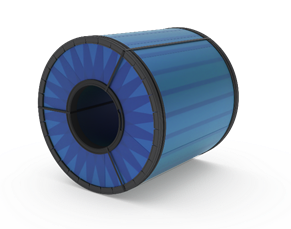
- Reinforced stretchfilm wrapping with VCI, applied with larger overlap. If coil edges are sharp, use protectors at the coil edges to avoid damage to stretchfilm.
-
- Inner and outer diameter edge protection (eye + mantle) + plastic or steel straps.
Why it works
Plastic stretchfilm with VCI protects against corrosion and with reinforcements it is less likely to be damaged. An increased overlap improves the sealing of the coil.
Placing protectors over the coil edges minimizes the risk that the stretchfilm breaks due to abrasion against the sharp steel edges during loading and handling. Keeping the stretchfilm intact is crucial to maintain VCI effectiveness.
Inner and outer diameter edge protection protects the parts of the coil that are most likely to sustain impact damage during handling, transport and storage. Inner diameter edge protection also protects straps used to secure the coil from chafing.
Export transportation
Profile: Several weeks in transit, often intercontinental shipping, using multiple transport methods with an added number of loading and unloading points. Temperature swings, possible saltwater exposure or container humidity threats.
Packaging objectives
-
- Best possible corrosion protection.
-
- Reinforced impact resistance for handling at multiple nodes by third parties with varying familiarity with your goods.
-
- Packaging that will sustain prolonged exposure to both moisture and vibrations.
Recommended packaging
-
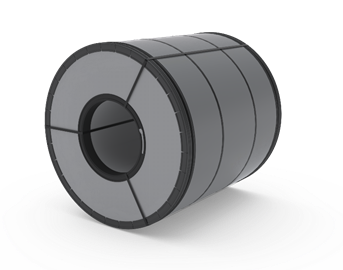
- Reinforced, solid stretchfilm wrapping with VCI. If coil edges are sharp, use protectors at the coil edges to avoid damage to stretchfilm.
-
- Inner and outer diameter edge protection (eye + mantle/side).
-
- Plastic coil body protection over the coil mantle, side and inside the eye.
-
- Steel straps with metal closures.
Why it works
VCI is effective for preventing corrosion even during long transits. Keeping the stretchfilm protected from chafing when using lifting devices ensures VCI effectiveness over time.
Plastic edge protection in combination with plastic coil side and mantle protection provides protection from mechanical impact from additional loading and offloading operations. It stays intact even in moist or wet conditions.
Steel straps keep the coil edge and body protection in place. They are impact resistant and the steel closures remain secure even when subject to prolonged vibration.
Overview
| Objective | Local transport | Long distance | Export |
|---|---|---|---|
| Corrosion defence | Stretchfilm wrapping with VCI | Reinforced stretchfilm wrapping with VCI | Reinforced stretchfilm wrapping with VCI |
| Impact protection | Edge guards in the eye | Edge guards in the eye + on the outer diameter | Edge guards in the eye + on the outer diameter, plastic shock.absorbent body protection, straps with steel closures |
|
|
|
|